
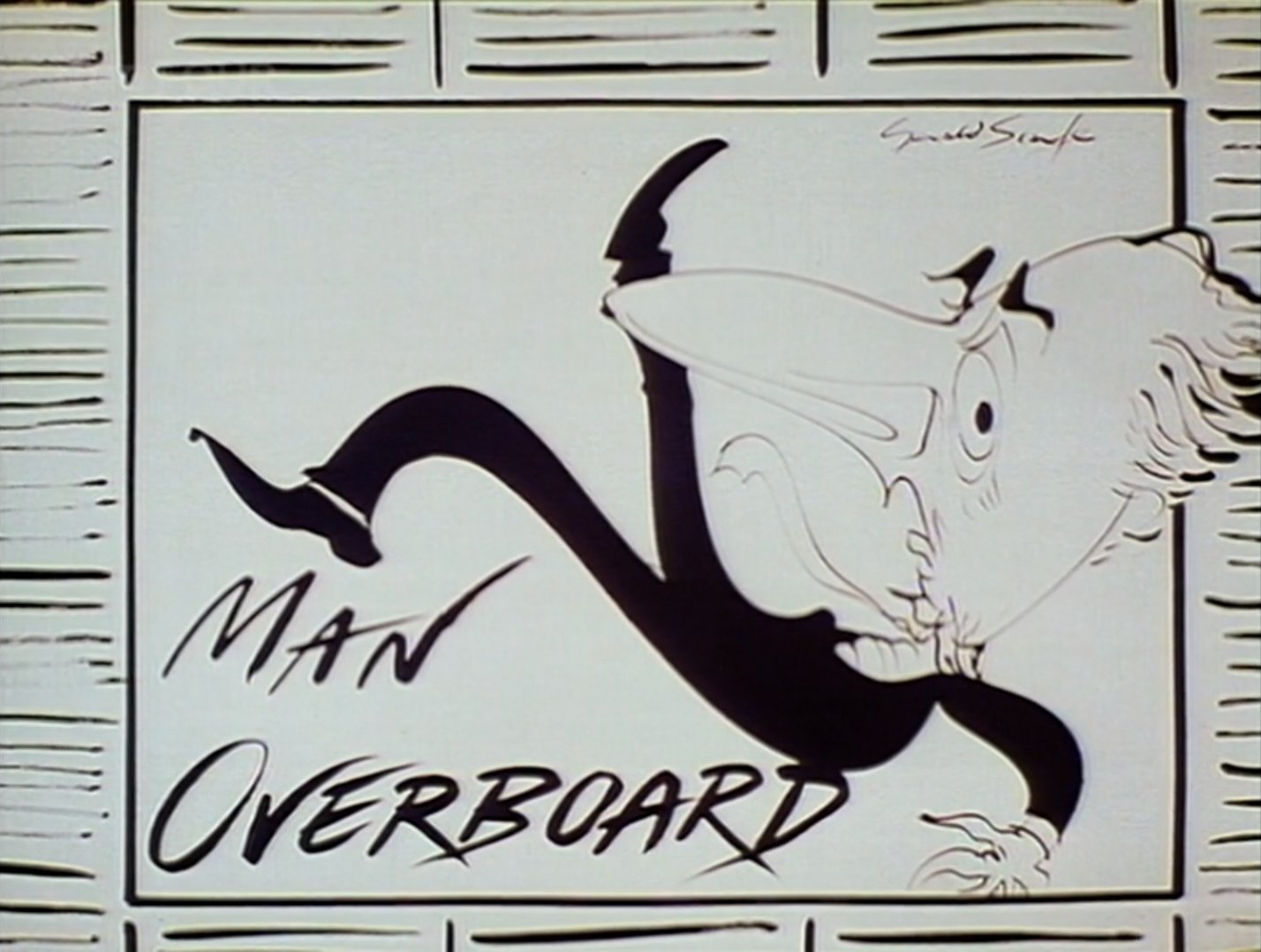
Oh dear, it’s looking rather dire for Sir Keir Starmer, the embattled Prime Minister who is desperately trying to hang on to his job in spite of one of the most disastrous results in the local elections I can remember.
Local elections in the United Kingdom are often seen as a referendum on the government in power in Westminster and in particular the current occupant of Number 10 Downing Street and there’s no sugarcoating just how damning a referendum last week’s showing by Labour was and how that’s just turned the wick up on the fire currently raging underneath Starmer’s bum.
Take a look at this graphic breaking down just how much of a swing there was from Labour with Reform UK being a huge beneficiary:
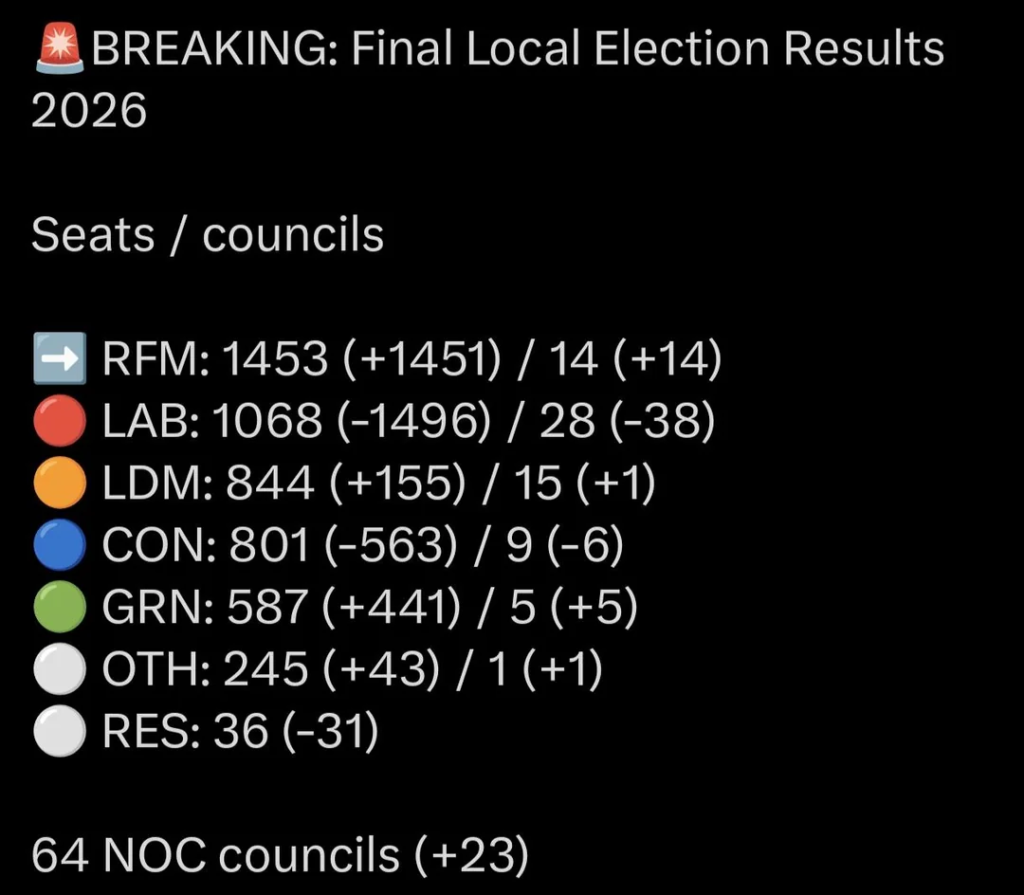
There is no way Sir Keir Starmer can just blithely ignore 1,500 members of his Labour party effectively being put to the sword in favour of Reform’s Nigel Farage and “30p Lee” Anderson (or “Leeanderthal” which is even more accurate a description of that vile individual) of Reform UK.
In case you’re not familiar with the Reform UK party…think of them as the even more extremist MAGA-analogue that’s even more to the right than the Conservatives who seemingly lose another of their backbenchers in a defection to Reform UK on the other end of the Opposition benches in the House of Commons on a weekly basis.
Words don’t begin to truly how awful that lot is…they’re the ones that pushed the Brexit referendum (under their previous guise as the Brexit Party) which the Tories under successive Prime Ministers (May and Johnson) actually implemented what has been the most economically and politically stupid policy since the last time they tried disrupting Europe from the outside.
It gets even worse when you consider just how much of a rinsing Labour suffered in the devolved parliaments within the United Kingdom.
Labour was pretty much wiped out completely in the Senedd Cymru (the Welsh parliament) with their worst showing in over a century (!) and hauled in a record low number of seats in Holyrood (where the Scottish parliament sits).
So it shouldn’t come as any shock that there has been a simmering campaign where the usual suspects of having ambitions toward a stay in Number 10 for themselves have been anonymously briefing their favourite pet journalists at Moncrieff’s Bar (one of several drinking establishments within the Palace of Westminster and the successor to the famous Annie’s Bar where journalists would go to be fed a story with the side of the odd drinkie).
Sir Keir has been doing his level best to repeal boarders and maintain some semblance of control over Cabinet but with the near constant flow of stories in the news starting at a point of when he’ll resign/be pushed out rather than if and now the resignations of junior ministers in the government, it’s hard to imagine how he’s going to survive the week and still remain in Number 10.
In fairness, he’s been dealt an awful hand and has largely spent the first two years of this parliament digging the UK out of the self-inflicted economic malaise and the appallingly poor state of the Treasury budget which had a huge hole blown in it by the previous governments under Liz Truss and Rishi Sunak with massive unfunded mandates and revenue shortfalls thanks to disastrous economic policies (that’s what brought down Liz Truss in 44 days making her the shortest serving PM ever) and not much better policies championed by Sunak until Labour won a massive working majority in the last general election.
When you add to it a communications team that has made an absolute dog’s breakfast of even the good economic news occasionally coming their way and the complete own goal of appointing Lord Mandelson as UK Ambassador the United States after a casual and botched job of vetting saw one of Jeffrey Epstein’s associates elevated to being the chief diplomat to a country currently ruled by another close associate of Epstein.
One own goal after another has been the underlying story line of Sir Keir Starmer’s nearly two years as Prime Minister which seems somewhat shocking when his remit prior to entering politics and eventually ascending to be the Leader of the Labour Party was as a lawyer culminating with a stint as the Director of the Crown Prosecution Service.
You’d think that a lawyer would be well-versed in tactics and strategy but that seems to have not been the case with Starmer once he entered Number 10.
When you look at the list of previous Prime Ministers who were lawyers by trade prior to their ascent to the most senior position in the UK government, it’s hard to ignore the pattern that suggests that lawyers often tend to be decent leaders of His Majesty’s Loyal Opposition but have a much harder time of it in office with the rare exception every now and then:
- Spencer Perceval (1809-1812) – he was described as “able, trustworthy, and narrow-minded” which comes off as somewhat of a backhanded complement. He was also the only PM that has the distinction of being assassinated.
- Herbert Henry Asquith (1908-1916) – Lovely in times of peace, hopeless in leading the country during WWI which led to his ouster.
- David Lloyd George (1916-1922) – Led the UK to victory in WWI when Asquith couldn’t but the Treaty of Versailles and a dreadful run of domestic policy ended up bringing him down. Bit of a mixed bag, really…
- Clement Atlee (1945-1951) – Arguably amongst the most capable lawyers in Number 10 in this list and having the distinction of his time in Number 10 being bookended by none other than Sir Winston Churchill but a failed attempt to coalesce his support in the Labour Party in the snap election ultimately ended his time as Premier.
- Margaret Thatcher (1979-1990) – Probably the most polarising of all of the lawyers on this list, the UK’s first female Prime Minister was either beloved or loathed depending on where one fell on the political and economic scale. Certainly the Falklands War buoyed her standing but persistently high unemployment and social unrest consistently dogged her until she was finally brought down by a leadership challege.
- Tony Blair (1997-2007) – It’s hard to argue with Blair’s diplomatic record with the highlight being the Good Friday Agreement that finally brought some semblance of peace and eventual devolved government to Northern Ireleand and his deft political touch in the aftermath of the death of Diana, it’d be the opposition to the Iraq War that eventually would send him packing to a life after Number 10 with his fingers still in many diplomatic pies.
Sir Keir’s dogged determination to stay on as Prime Minister in spite of rapidly escalating opposition seems reminiscent of John Major who eventually inherited Number 10 after Michael Heseltine’s leadership bid that brought down the Thatcher government ultimately failed to win the requisite support to form a government.
For a time, he may well manage to pull off remaining in post.
But it’s genuinely hard to imagine how he can possibly survive long-term if not lead Labour into the next general election in three year’s time.
Unlike our government, there are plenty of very effective tools available to Members of Parliament to bring down a Prime Minister they no longer have any use for being in Number 10. Whether it’s the critical mass of letters expressing a lack of confidence in the Prime Minister being sent to the “1922 Committee” when the Tories want to oust their leader or Labour’s executive countenancing a leadership challenge and eventual voting by the membership, the UK government rarely has a problem getting rid of a PM who has stayed on past their sell by date.
Right now, all eyes will be on Wes Streeting who seems the most likely of the members of the Cabinet to mount a leadership challenge and for now he’s keeping his mouth shut.
Sir Keir blocked another potential rival (Andy Burnham) from even standing for election to be returned to the House of Commons.
With his record of unforced errors often punctuated by a U-turn on the most egregiously stupid policies, poor communication within the government and especially to the people, and a general lack of political skill once elevated to Number 10 and now a disastrous showing at the polls that’s wiped out quite a huge swathe of local Labour politicians…it really does seem as it’s a matter of when and not if he goes and how messy that departure will be.
So it rather goes to show that historically, most of the lawyers who became Prime Minister were often more effective as the Leader of the Opposition as opposed to their time in government which should seem more shocking than it actually is.
Being Leader of the Opposition is a much easier job and allows the incumbent to constantly attack the government in the hopes of bringing it down in a confidence motion or at the general election.
Being Prime Minister often requires political and personal skills that lawyers are usually not trained for with the rare exception of the charismatic Tony Blair who ended up getting brought down when he was no longer viewed as convenient or likely to be successful in the general election.
So far since the debacle of the local elections, he’s tried to reset the debate in a speech that was widely viewed as disastrously uninspiring, he’s tried browbeating the Cabinet into falling in line behind him “to get on with governing the country” but three ministerial resignations and unrest on the backbenches numbering approximately 80 Labour MPs who are ready to make Sir Keir walk the plank, and one can only imagine the lively debate that will come on the motion for a Humble Address in response to the King’s Speech tomorrow during the State Opening of Parliament.
How long will Sir Keir Starmer remain as Prime Minister remains to be seen but it’s not looking terribly good for the embattled occupant at Number 10 Downing Street and only promises to get far worse if history is any guide.