

Easter Monday morning brought the most unwelcome of news bulletin that Pope Francis had passed away in the Vatican City.
To say it was shocking was a grand understatement that even the British would have been proud of considering that he’d surprised the many faithful in St Peter’s Square with a surprise appearance on the balcony of the Basilica followed by a tour of the square in the Popemobile the day before.
This merely weeks after he’d had a very close call with death with double pneumonia, a condition he was susceptible to due to having part of one lung removed earlier in life.
It’s not unusual for those who suffer greatly to make what appears to be a miraculous recovery only to finally succumb to the death that awaits us all one day. In his final hours, he had felt unwell and was attended by his nurse and medical team and with one final wave one hour later slipped into a coma and would eventually be claimed by a cerebral hemorrhage likely due to a stroke and irrecoverable heart failure according to the Vatican.
His remarkable papacy ended much as his path of following in the shoes of the fisherman began by doing what he found most pleasant and joyful amongst his duties, tending to the pastoral duties amongst the people he loved so dearly.
I think it’s fair to say that of all of the popes I have known in my lifetime, Francis was the first pope that I’d really liked from the start and never had any reason to change that opinion since.
It’s not like I actually disliked his predecessors.
I barely knew Paul VI and John Paul I wasn’t on St Peter’s throne long enough to really get to know him other than I do remember him having a wonderful smile and apparently he was known for that.
John Paul II inspired Poland to abandon the Communist Party in favour of the Solidarity movement (with persistent rumours the Vatican Bank was financing them!) and inspired the rest of the Warsaw Pact to also throw off their Moscow-dominated regimes leading to the collapse of the Soviet Union itself not long after. As someone with Hungarian ancestry and a child of the Cold War, this was no insignificant achievement and John Paul II was a consistent thorn in Moscow’s side wielding soft power more effectively than the Politburo could have ever imagined.
The reign of Benedict XVI was largely a continuation of the conservative doctrines and dogma favoured by John Paul II which was hardly surprising considering his role as Prefect of the Congregation for the Doctrine of the Faith which would earn him the nickname “God’s Rottweiler” for his emphasis on traditional Catholic teachings. That, and nearly a quarter century at the heart of the Vatican political machine (the Curia) prior to his election made sure that the Pontifex Maximus was also in fact very much primus.
Francis could not have been more different in terms of temperament and doctrine compared to his scholarly and learned predecessor which is why it was somewhat surprising they’d strike up a genuine friendship, particularly during the awkward years of having Benedict still living as Pope Emeritus.
Given his known dislike of pomp and circumstance in favour of a simpler and more modest reign focusing on the people, especially those who were marginalised or imprisoned under authority or downtrodden, it seemed only fitting that the first Jesuit pope would take on the pontifical name of Francis in homage to St Francis of Assisi who was a patron to ministering to the poor, as well as the protection of animals and the environment.
“He brought to Christianity an idea of poverty against the luxury, pride, vanity of the civil and ecclesiastical powers of the time. He changed history.”[
Pope Francis on his namesake St Francis of Assisi
From the moments after he was elected in the Sistine Chapel when he received the blessings from the cardinals informally whilst standing rather than seated on the papal throne to his first appearance at the balcony to deliver the “Urbi et Orbi” address in a simple white cassock with his favoured iron cross rather than the gold one of his predecessors, it was very clear that this was to be a very different papacy to that of Benedict XVI who himself had broken tradition by becoming the first pope to resign in nearly 600 years.
The changes didn’t stop there. Francis made it abundantly clear that he preferred to live in far more modest accommodations at the Domus Sanctae Marthae (built for housing cardinals during conclaves so they wouldn’t be sleeping on cots in the Sistine Chapel when they’re locked away to deliberate and vote on a new pope) as opposed to the papal apartments in the Apostolic Palace. He also rarely spent time at the Papal Palace of Castel Gandolfo which was the traditional summer home for the pope and is now a museum and unlikely to return to that function.
Soon after, the bonuses that were normally paid to Vatican employees were scrapped in favour of donating those several million euros to charity and the bonuses paid in the Vatican Bank soon followed.
Over the course of his papacy, he would frequently minister to prisoners and wash their feet (including women for the first time in that ceremony). Indeed, his final Maundy Thursday found him in a nearby prison amongst the prisoners reaffirming his sincere belief that he served all people.
“Who am I to judge?”
Pope Francis on LGBTQIA+ parishoners
“We have to work harder to develop a profound theology of women within the church. The feminine genius is needed wherever we make important decisions.”
Pope Francis
He was also far more inclusive to traditionally marginalised communities by actively welcoming LGBTQIA+ people to the faith (though he wouldn’t go so far as to allowing blessing of same-sex unions), markedly elevating the role of women within church administration including co-chairing and voting at the Synod of Bishops as well full membership in various dicasteries in Rome, and welcoming people who had divorced and civilly remarried back to the sacraments of Penance and the Eucharist.
“This is why I want a Church which is poor and for the poor. They have much to teach us. Not only do they share in the sensus fidei, but in their difficulties they know the suffering Christ. We need to let ourselves be evangelized by them…”
Pope Francis, Evangelii Gaudium
“An example I often use to illustrate the reality of vanity, is this: look at the peacock; it’s beautiful if you look at it from the front. But if you look at it from behind, you discover the truth. Whoever gives in to such self-absorbed vanity has huge misery hiding inside them.”
Pope Francis
But his likely greatest achievement and lasting legacy (presuming the next pontiff doesn’t immediately reverse course) will be his reforms intended to strengthen and focus the Church on the mission of charity and a stronger connection with the ordinary person.
The lasting memory I’ll have of the papacy of Francis is the ease with which he communicated and connected with the people he encountered and the genuine love and compassion he showed toward them.
Whether it was the video of the child that went viral who he asked to come into his embrace to secretly ask the question he wished the Francis to answer (we’d later learn it was “is my father in Heaven?”) and the heartfelt embrace and tears that followed or when he officiated a wedding at 36,000 ft on a flight in Chile, he always showed a deft touch when it came to the pastoral side of his papacy.
“I judged they were prepared. They knew what they were doing. Sacraments are for people. All the conditions were clear. So why not do today what you can do today rather than put it off to tomorrow, when tomorrow might have turned into 10-20 years from now?”
Pope Francis on marrying the flight attendants in flight
“But the thing was easy. Tell the parish priests: ‘The pope interrogated them well. They did the course. They were conscious of what they were doing, and they were in a regular situation.'”
Pope Francis’ suggested response to criticism and doubt of the legality of the in-flight ceremony
The pontiff’s passion for football and especially his beloved Club Atlético San Lorenzo de Almagro from his native Argentina were never in doubt to anyone who was paying attention and was yet another way of keeping the pope connected with the people that he loved.
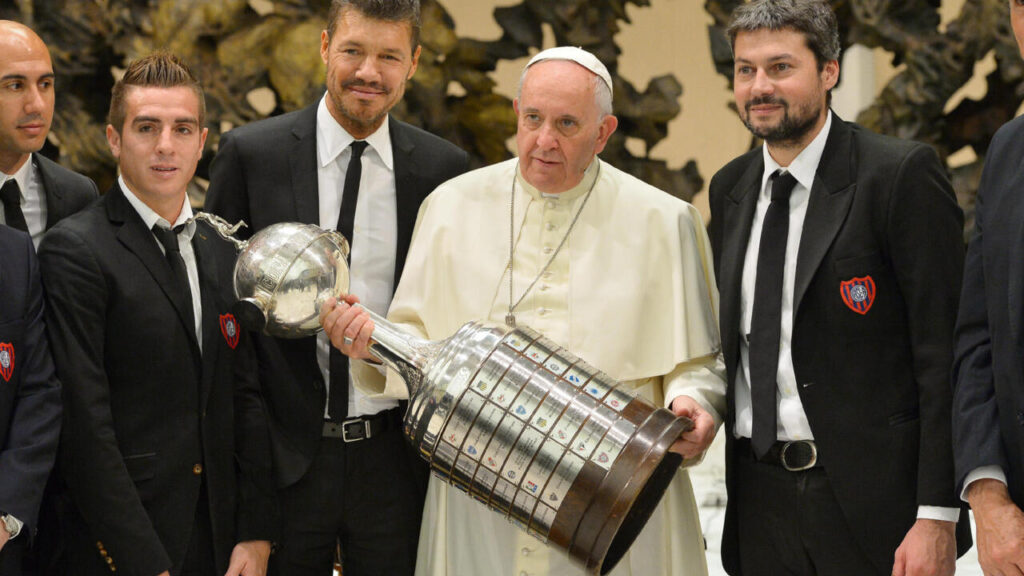
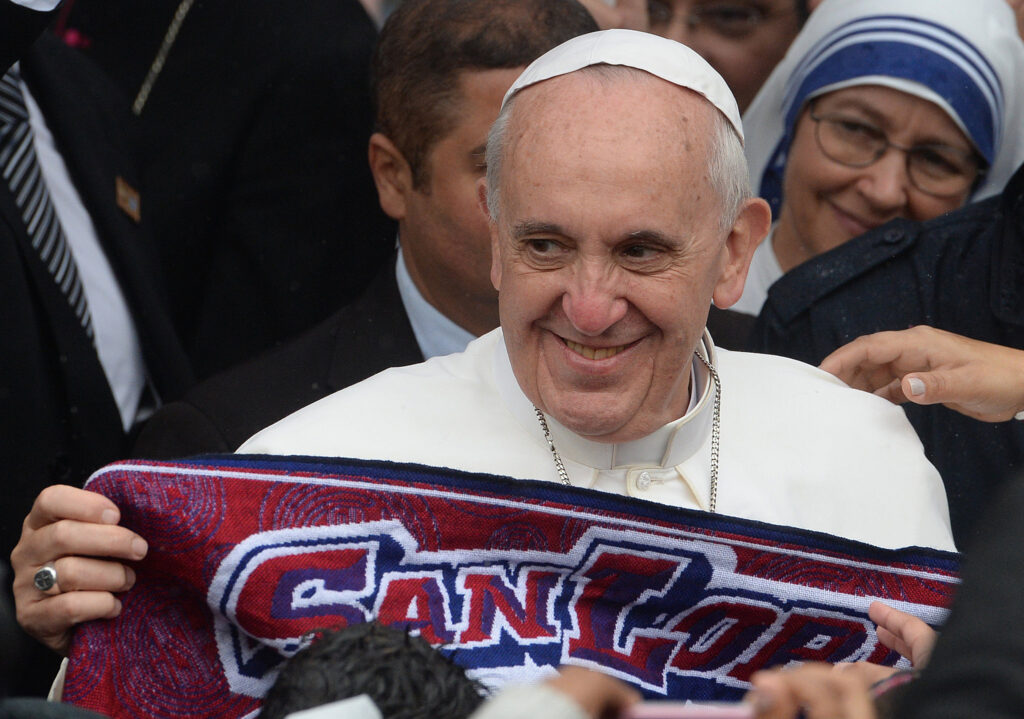
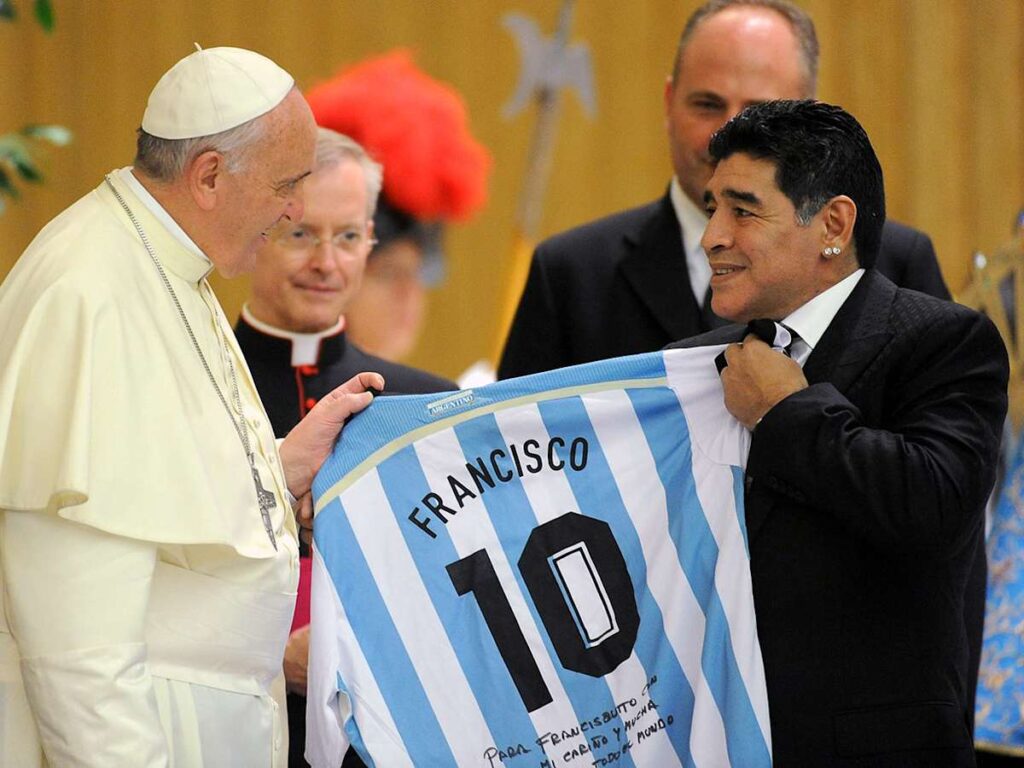
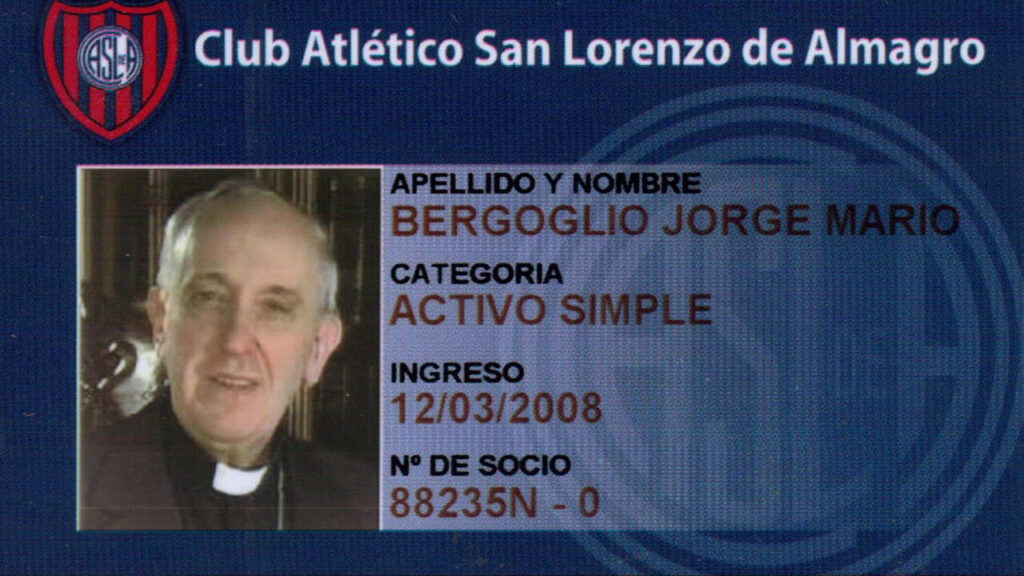
He wasn’t afraid to show the human being living in the white cassock and in so doing reminded me of Anthony Quinn’s portrayal of a Russian political prisoner who had been Metropolitan Archbishop of Lviv (in what is now the Ukraine) that was reluctant to be elevated to cardinal and soon after elected pope as a compromise candidate (much in the way John Paul II was) in the Cold War movie “The Shoes of the Fisherman”.
Quinn’s Pope Kiril is plain spoken and though his tasks are to navigate his own path between the Curia and preventing a nuclear war between the Soviet Union and China, he also escapes from the Vatican in a normal priest’s frock and spends much time in Rome on the more pastoral tasks of ministering to a doctor whose marriage is failing and giving the last rites to a dying man, first starting with the Catholic prayer and then switching to the Jewish tradition he’d learnt from a rabbi in the gulag when informed of the man’s faith.
“He who enters the conclave as pope, leaves it as a cardinal.”
Well-known saying that the papabile (“able to be pope”) might not be elected…
Like the fictional Pope Kiril, Francis’ own election was as considered somewhat of a surprise as many had thought his window of opportunity to be elected had closed in 2005 with the choice of Benedict XVI where then Archbishop of Argentina Jorge Mario Bergoglio was rumoured to have finished second in the secret balloting.
And in another parallel to the movie where Pope Kiril pledges the wealth of the Church to feed the Chinese who were suffering from a devastating famine and prevent the looming nuclear war, so has Francis pledged more of the Vatican’s vast resources to the poor and forgotten.
Even in death, his funeral arrangements show the same sense of modesty and humility that marked his reign as pope. He has chosen a simple zinc-lined wooden casket as opposed to the nested caskets of cypress, lead, and oak and approved simpler funeral rites more like a bishop’s than a pope’s rites.
He has also requested burial at Santa Maria Maggiore basilica (which he would visit before and after every apostolic trip) outside the Vatican in Rome rather than in the crypt of St Peter’s, becoming the first pope in over 100 years to make that election.
And in a final nod to preferring the Church’s resources go toward the missions he intended, he had arranged for a benefactor to cover the costs of the ceremony and the internment in a simple tomb to be inscribed “Franciscus”.
Who knows what the College of Cardinals may do in conclave and what sort of pope they may choose next but we do know that Francis appointed 80% of the cardinals that will be making that decision so one would think that there’s a better than average chance that the next pope may well come from outside Rome and Italy and would likely be of a similar theological and pastoral mindset to Francis.
But conclaves are the forum for surprises and it’s equally possible that reactionary forces who have chafed under Francis’ papacy and it’s focus on the poor, the threatened, and those whom have been harmed by the actions of the Church in the past might well ascend again to the throne of St Peter to walk in the shoes of the fisherman.
The papabile this time round certainly looks a diverse lot (with Europeans only making up a plurality rather than an outright majority) and we’ll know soon enough when the white smoke billows from that chimney at the Sistine Chapel and Francis’ successor walks out on the loggia at St Peter’s to deliver his first “Urbi et Orbi”.
I rather hope they choose wisely and well.
Riposa in pace, Papa Francesco!